Environment of Caspian Sea in critical condition, experts warn
Print
8 February 2012. PenzaNews. The Caspian Sea has increasingly come under the spotlight recently due to the growing pollution of the environment of the region as a result of human activities. According to the United Nations Environment Programme (UNEP), the sea suffers from an enormous burden of pollution from oil extraction and refining, offshore oil fields, radioactive wastes from nuclear power plants and huge volumes of untreated domestic and industrial waste introduced mainly by the Volga River that accounts for 80% of the Caspian’s freshwater inflow.

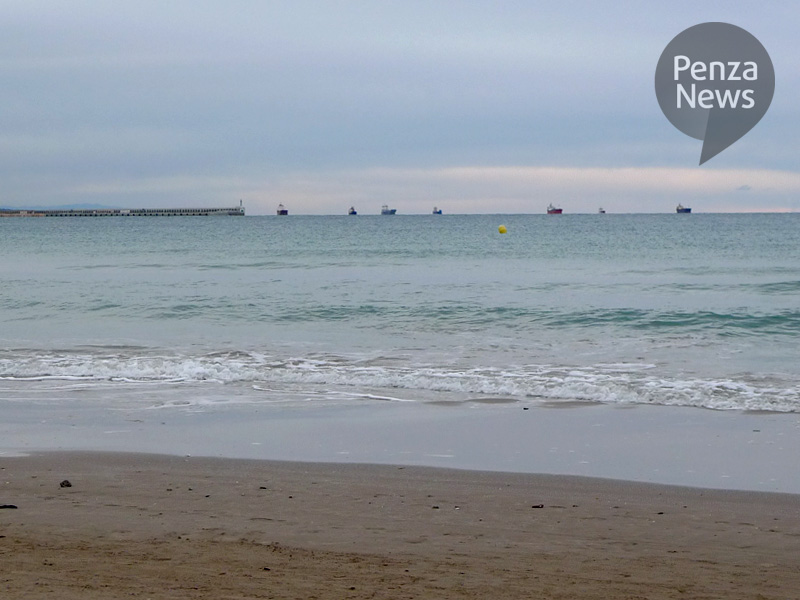
© PenzaNewsBuy the photo
Reza Pourgholam, head of the Caspian Sea Ecological Research Institute, told Fars news agency that the level of industrial and oil pollution in the Caspian Sea had reached a “critical condition.” In his words, exploitation of oil fields and traffic of large oil tankers dump over 122 thousand tonnes of potentially cancerous oil pollutants into the world’s largest inland sea annually.
He stated inter alia that the sea is also poisoned by large quantities of heavy metal just as dangerous as the hydrocarbons, adding that “304 tonnes of cadmium and 34 tonnes of lead pollute the sea every year.” Pourgholam pointed out that 95% of the pollution originates from the sea’s littoral states in the north and northwest, namely Russia, Kazakhstan and Azerbaijan, home to a major offshore oil industry.
As UNEP contends, booming exploitation of oil and gas resources, growing networks of pipelines and transport routes, industrial pollution from inflowing rivers and ground water, sea-level fluctuations, climate change and coastal desertification, and in particular the loss of biodiversity due to overexploitation of fish stocks and the introduction of invasive alien species — these are just some of the many environmental challenges that the Caspian Sea is facing.
The Caspian region is also home to around 15 million people, who greatly depend on the natural riches of the Caspian Sea. Therefore, protecting the Caspian environment is not only a matter of protection for the environment’s own sake, but is also a prerequisite for reducing health risks for the coastal population and for fostering sustainable economic development. Since most of the problems are transboundary in nature, these challenges require cooperation between all Caspian states.
The only legally binding agreement regulating environmental issues is the Framework Convention for the Protection of the Marine Environment of the Caspian Sea, also known as the Tehran Convention. It was designed by the representatives of the five Caspian littoral states (Azerbaijan, the Islamic Republic of Iran, Kazakhstan, Russian Federation and Turkmenistan) with the support from UNEP in 1995 and was signed in 2003. However, this treaty was ratified by all the participating states only three years later and entered into force on 12 August 2006.
As former UN Secretary-General Kofi Annan stressed at the time, the signing of the Tehran Convention is a “significant step forward for the region” and once ratified “this landmark treaty will benefit the health and livelihoods of hundreds of millions of people”.
The Tehran Convention lays down general requirements and institutional mechanisms for environmental protection in the Caspian region. It requires the states parties to take measures aimed not only at the environmental protection of the Caspian Sea from all sources of pollution but also at the preservation, restoration and protection of the marine environment.
However, the practical implementation of the Tehran Convention has been delayed repeatedly due to the inability of the states parties to reach consensus during the negotiations of the four ancillary Protocols to the Convention covering four priority areas of concern. These include the Protocol on the Conservation of Biological Diversity, the Protocol on the Protection of the Caspian Sea against Pollution from Land based Sources and Activities, the Protocol concerning Regional Preparedness, Response and Co-operation in Combating Oil Pollution Incidents, and the Protocol on Environmental Impact Assessment in a Trans-Boundary Context.
Only in August 2011 at the third Conference of the Parties in Aktau, Kazakhstan the representatives of Russia, Azerbaijan, Kazakhstan, Iran and Turkmenistan managed to sign one of the Protocols — the Protocol concerning Regional Preparedness, Response and Co-operation in Combating Oil Pollution Incidents. This is the first time the parties have been able to reach such agreement since the signing of the Convention in 2003. This Protocol will enter into force upon completion of the process of legislative approval at the national level in each of the participating states. According to the Russian Nature Ministry this could happen by the time the next Conference of the Parties convenes in Russia in 2012.
Director of the Department for International Cooperation of the Russian Nature Ministry Nuritdin Inamov suggested that a coordination center could be created in 2012 to ensure Russian cooperation with the other Caspian littoral states in protecting the Caspian Sea from possible oil spills. He also added that the center would monitor the activities of Russian oil companies, gather information from other countries and contribute to efforts aimed at mitigating the effects of possible disasters.
“The coordination center will be a part of the regional cooperation mechanism within the framework of the Protocol. Nonetheless, it is hard to predict how fast the relevant approval procedures will be completed inside the countries, but we hope that the Protocol will come into effect by 2012. Russia will set up a special center to comply with the decision to cooperate. It will most likely be created within the Ministry of Transport. Undoubtedly, active exploitation of oilfields in the Caspian region has pressured the countries to come to agreement. Today no country has an accurate idea about the environmental condition of the region as a whole. The cooperation agreement allows us to receive necessary information and carry out proper environmental monitoring,” Nuritdin Inamov explained.
The creation of this coordination center is especially relevant in light of the existing problems with the assessment of levels of oil pollution in the Caspian Sea. According to Sergey Lebedev, Leading Scientific Officer of the Geophysics Center of the Russian Academy of Sciences, the pollution of the Caspian Sea from hydrocarbons originating from transportation and emergencies is largely understated. He also pointed out the need to develop effective systems for monitoring pollution from hydrocarbons in the Caspian Sea for better control of pollution.
However, it is impossible to take effective measures to protect the Caspian Sea from pollution without first resolving a number of broader political and legal issues involving all the Caspian states, which is likely to affect the interests of other countries as well.
“The unsettled delineation of the Caspian Sea and the uncertainty in its legal status are the main obstacles for successfully coping with many issues, including environmental protection and preservation of the biological resources,” noted a group of experts who authored The Caspian Sea Encyclopedia under the leadership of Professor Igor Zonn, Doctor of Geographical Sciences and an academician of the Russian Academy of Natural Sciences.
In their opinion, the threats of the deterioration of the environmental situation in the Caspian region and of the depletion of its natural resources directly depend on the condition of the economy and awareness of the public about the global character and importance of these issues. This threat is exacerbated by the excessive development of the fuel-power industries, drawbacks of the legal framework for nature conservation activities, limited application of the nature-saving technologies and lack of environment awareness which increases the risk of technogenous catastrophes.
According to Director of the National Center for the Environment and Forecasting of Azerbaijan Telman Zeynalov, no environmental recovery and control of pollution will be possible until the legal status of the Caspian is settled because none of the Caspian states is willing to take responsibility for controlling the environmental situation of the Caspian Sea.
Maxim Levinson, then a lawyer with White & Case LLC, stated that the determination of the legal status of the Caspian should necessarily set out, in addition to laying down the framework for subsoil use, rules of marine navigation and establish a legal framework for the use of biological resources and cooperation among states in resolving environmental and hydrological problems and ensuring the safety of pipelines underneath the seabed.
“Over the past few years the problems of the Caspian region have become the object of active external political activities of many states. Besides the Caspian littoral states, these problems are of particular concern to the developed countries in the West. In fact, the prospects of the Caspian Sea as an oil production region and its unique geographical position put it at the forefront of the regional geopolitical differences whose significance stretches far beyond the boundaries of the Caspian states themselves,” he explained.
An example of such differences is the plan proposed by Turkmenistan and Azerbaijan to build a trans-Caspian gas pipeline across the Caspian seabed (Nabucco project) for the transport of natural gas to Europe. Russia and Iran are opposed to the plan because of, inter alia, environmental concerns connected with the project. The other Caspian state Kazakhstan has not yet made its official position on the issue known. Meanwhile, on 12 September 2011 the European Union approved the mandate of the European Commission for negotiations on the construction of the trans-Caspian pipeline clearly in defiance of the objections raised by environmental experts.
Experts agree that efforts at implementing any stage of the Nabucco project without the consent of Russia, Kazakhstan and Iran could lead to unpredictable consequences for the region as no one knows how the geological structure and relief of the Caspian Sea react to seismic activity and the ongoing tectonic processes. One of the most powerful earthquakes, but certainly not the last, occurred in the Azerbaijan sector of the Caspian Sea on 6 February 2012. According to experts, including Russian specialists, the building of the pipeline underneath the seabed in a seismic zone capable of producing magnitude 6 earthquakes is very dangerous: any leakage from the pipeline in the closed water basin could lead to full pollution of the Caspian. However, the profits that Western companies seek to get from the project appear so far to carry much more weight for the international community than the serious environmental problems in the Caspian region.
The Caspian Sea is the largest land-locked body of water on Earth with a unique ecological system inhabited by over 400 endemic species, among which the Caspian sturgeon and the very rare fresh water seal are the most famous.
The coastlines of the Caspian are shared by the five Caspian littoral states, namely Azerbaijan, Kazakhstan, Iran, Russia and Turkmenistan. The significance of the Caspian region is primarily based on its rich mineral resources. According to the estimates of the U.S. Department of Energy the total resources of the Caspian region constitute 100-200 billion barrels of oil (which exceeds North American oil resources as a whole) and 7.9 trillion cubic meters of gas.
The OECD report states that the proven oil resources of the Caspian account for about 3% of the world reserves.
Kazakhstan has the largest proven oil reserves and is the leader in oil production. Azerbaijan and Turkmenistan are second and third respectively. Iran is not yet active in hydrocarbon exploitation in the Caspian.