Foreign analysts believe that economic reforms in the Western Balkans are inevitable
Print
19 April 2012. PenzaNews. Labor markets of Western Balkan countries are characterized by low levels of employment with the particularly high unemployment rate among young people. Many Socialist-era companies are bankrupt, their production halls are empty and their machines have been dismantled and sold as scrap. Kori Udovicki, assistant secretary-general at the UN Development Program responsible for Europe and the Commonwealth of Independent States and Gerald Knaus, the lead analyst of the European Stability Initiative speak about possible ways to overcome the impact of dramatic de-industrialization in their analytical article published in the foreign press.

© PenzaNewsBuy the photo
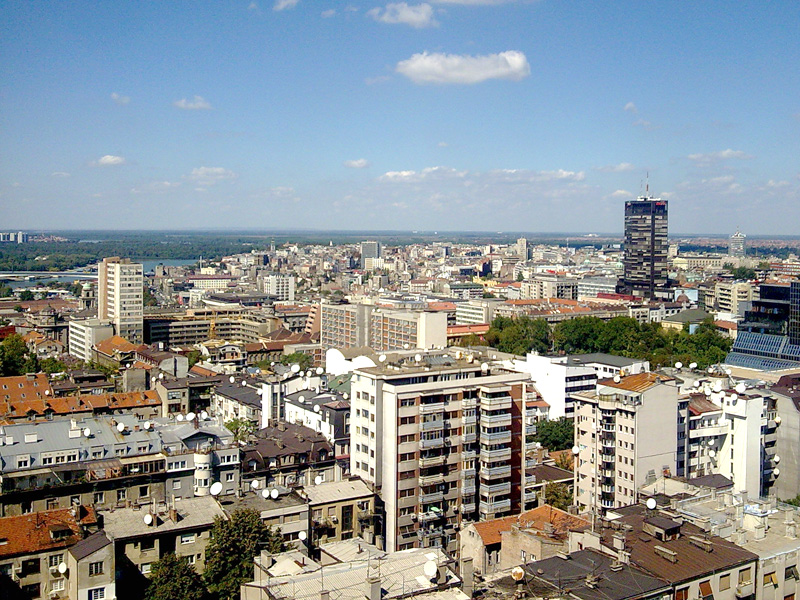
“Contemporary Serbia is a society whose population is both aging (with an average age of 41, it is one of the oldest in the world) and shrinking. So is its industry. After stagnating during the economic recovery of the 2000s, the employment rate (the percentage of people of working age actually working) has sharply fallen since 2008. Today it is about 45%, more than 20% worse than the EU average,” the article says.
The experts note that historically the textile industry had a very great importance for Serbia, but at the same time, they admit that the boom years are a distant memory.
“In the textile and clothing sector, the number of workers has collapsed from 160 thousand in 1990 to around 40 thousand in 2010. Meanwhile, Serbia’s textile industry is representative of much of its industry, and Serbia’s labor market trends are representative of those in all of the post-Yugoslav states,” underlines the article.
Nevertheless, the analysts believe that the Serbian textile industry’s decline was not inevitable. For instance, in many peripheral regions in southeast Europe, textiles have become a locomotive of growth and exports, creating hundreds of thousands of low-skilled jobs. Bulgaria was able to increase its exports in the sector from $280 million to more than $2 billion between 1990 and 2010, contributing more than 100 thousand industrial jobs to the Bulgarian economy.
“Why are there more than 10 thousand jobs in the furniture industry in the central Turkish city of Kayseri, far from any forests, but not in Bosnia? Why are household appliance producers doing well in Slovenia, Romania and Turkey, but not in the Western Balkans? And why is there so little agro-processing for the EU market?” Kori Udovicki and Gerald Knaus wonder.
One answer, according to them, is that the growth model adopted in the Western Balkans over the last decade has discouraged governments from even asking such questions. Driven by a distrust of Socialist planning and a fear of corruption, the economic policies prescribed have had a laissez-faire flavor and focused not on specific sectors of the economy but on the general business environment.
“Policymakers have been praised for avoiding the temptation to shield declining areas of the economy from the discipline of the markets. At the same time, these policymakers have found it hard to acknowledge when former Socialist businesses were past the point of possible recovery, overburdened by debts and in urgent need of liquidation,” the article says.
Meanwhile, the key ingredients of the standard recipes for economic development remain valid. According to the experts, a stable macroeconomic environment and a good business climate are necessary conditions for sustained recovery.
“In a region ravaged by conflict and economic decline, a policy mix based on “hands-off” privatization and deregulation cannot be sufficient to launch a sustained economic recovery. Even during periods of relative economic growth and high inflows of foreign investment (FDI), the employment generated by the new entrepreneurial private sector was not sufficient to offset the number of jobs lost in the restructuring and privatization process,” believe the experts.
According to their words, there is an alternative model of economic growth: the key is inclusion into global chains of industrial production.
“Credible industrial policies are needed to define ways of encouraging FDI into those sectors where regions in the Balkans possess comparative advantages, from food processing to clothing, from furniture to basic engineering assembly,” the researches think.
Moreover, the article says that declining industries have left behind workers and educational institutions. Provincial cities have potential, but lack foreign contacts. According to Kori Udovicki and Gerald Knaus, the right initiatives and support can deliver what is needed.
“A competent industrial development agency, modelled, for example, on the Irish Industrial Development Agency (IRA) could do this job. But the key word here is “competent,” the article says.
This organization, according to the experts, would have to be able to offer support and advice, based on credible and painstaking sectoral analysis, to local administrations and companies. It would also have to be in a position to educate local governments on how to attract investors, and it would offer grants for private sector management training.
“There is no reason to assume that such competence cannot be built up in the Western Balkans. But success will hinge on the governments’ willingness to embrace a new philosophy about the important role of industrial policy in economic growth. This can only be done by the policymakers and governments of the countries themselves,” the experts say.
From their point of view, the EU is in a position to help. It could support the countries’ abilities to develop and pursue credible multi-year strategies in a whole range of sectors, including agriculture and rural development, transportation, environment and regional development.
“Last but not least, the credibility of Western Balkan integration into the EU market could be enhanced. For the Western Balkans, the last few years have seen agonizingly slow progress in this area, with no country other than Croatia having so much as opened EU accession talks. The more realistic the prospect of EU membership is, the bigger are the incentives for those interested in long-term investments in industrial production in the Balkans,” Kori Udovicki and Gerald Knaus note.
According to their words, numerous industrial development clusters in Romania and Turkey have seen growth and success. In all these cases, the political elites at the national and local levels have made the integration of local businesses into global chains of industrial production a strategic priority.
“Allowing the Western Balkans to continue down its current economic path is not an option. Today’s lack of employment opportunities is generating too much despair, especially among the young. There is, in fact, no greater and more urgent social and economic issue in the region,” the article says.
Fortunately, according to the experts, examples of successful industrial recoveries abound. All that is required to change the fate of people in Western Balkan countries is to take those lessons to heart.
International experts define the “Western Balkans” as five countries of former Yugoslavia — Serbia, Croatia, Montenegro, Macedonia, Bosnia and Herzegovina and also Kosovo and Albania.
Kori Udovicki obtained an MA and a PhD in Economics from Yale University, US. Now she is an Assistant Secretary-General of United Nations, Assistant Administrator of UNDP and Director of the Regional Bureau of UNDP for Europe and Commonwealth of Independent States (RBEC).
Gerald Knaus is a director, co-founder and one of the two founding analysts of the Berlin-based organization European Stability Initiative. He also worked at the Office of the High Representative and the International Crisis Group in Bosnia and Herzegovina. He is the author of “Bulgaria” (1997) and several other publications.