Clara O’Donnell: Europe should try to convince Washington to scale back its missile defence ambitions
Print
15 May 2013. PenzaNews. America’s European partners in NATO should try to convince Washington to scale back its missile defence ambitions for the next few years. Not only would this allow the US government to spend its shrinking defence budget on more pressing military needs. It would also improve European security by reducing tensions between NATO and Russia. This is the opinion expressed by Clara Marina O’Donnell, a senior research fellow at the Centre for European Reform and a non-resident fellow at the Brookings Institution, in her article “NATO and the costs of star wars” published in foreign media.

© PenzaNewsBuy the photo
“Over the last decade, the US has spent tens of billions of dollars constructing a shield to stop nuclear missiles from North Korea or Iran reaching its soil. So far, the shield does not work. Fortunately for the Americans, neither Pyongyang nor Tehran has nuclear missiles that could hit the US. Unfortunately, however, America’s missile defence program has upset China and Russia,” the article says.
According to Clara O’Donnell, the US has been increasingly worried about nuclear attacks by “rogue” states since the collapse of the Soviet Union.
“In 1998, a study group chaired by Donald Rumsfeld predicted that North Korea and Iran could field intercontinental ballistic missiles within five years. Today, however, Iran has neither intercontinental missiles nor a nuclear bomb. In March of this year, a report from the Pentagon’s intelligence agency – erroneously declassified – assessed “with moderate confidence” that Pyongyang could build a nuclear device that fits on a missile. But there is still no evidence that North Korean missiles are sophisticated enough to reach the US,” the expert notes.
Although the American mainland is not currently under threat, every president since George H.W. Bush has sought to deploy nation-wide defences against a limited attack by ballistic missiles, Clara O’Donnell says.
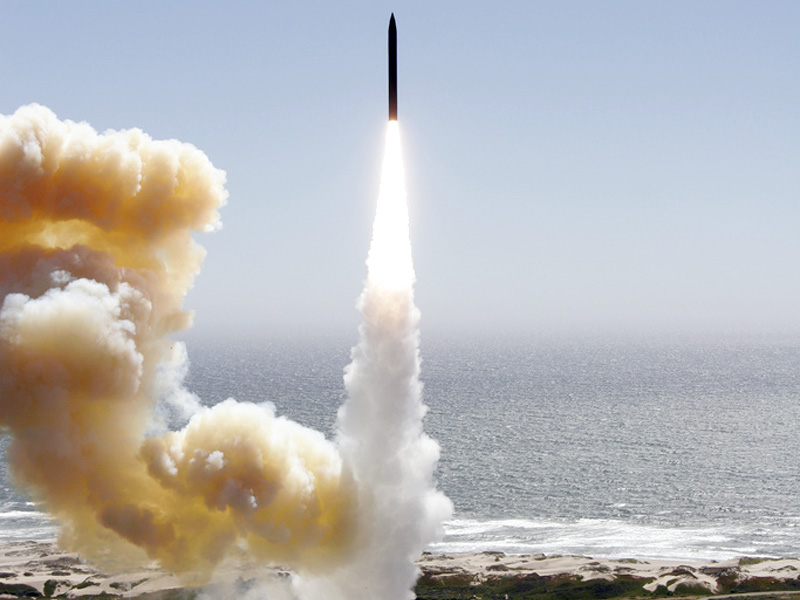
“Reviving some of President Ronald Reagan’s “star wars” ambitions, the US has had missile interceptors deployed in Alaska and California since 2004. Both the George W Bush and Obama administrations have also had various plans to deploy interceptors against intercontinental missiles at bases in Europe. In March, Secretary of Defence Chuck Hagel announced that because of technical problems and budgetary constraints, the US is suspending its efforts to build Europe-based strategic interceptors. He also said that in response to the bellicose attitude of North Korea’s new leader, the US will add 14 missile interceptors in on its West Coast, and perhaps deploy a few more on the East Coast, too,” the analyst says.
According to her, the Obama administration has been wise to cancel the European leg of its strategic missile defence plans as several recent studies had highlighted significant shortcomings in the program.
“For example, a 2012 report by the National Academy of Sciences concluded that the interceptors planned for Europe would have been too slow to stop an incoming missile,” the author of the article clarifies.
However, she believes that the US would be ill advised to increase the number of interceptors on the West – and possibly East – Coast.
“Studies have shown that the interceptors in Alaska and California do not work well either. According to Congress’ Government Accountability Office, ten out of the 30 interceptors rely on technology, which has never intercepted a missile during tests. The GAO estimates that it will take several years to repair this technology, costing the US taxpayer an additional 700 million dollars,” Clara O’Donnell explains.
Moreover, according to her, the Pentagon does not yet have a solution to another big problem – none of its interceptors can distinguish between an incoming warhead and debris or decoys.
“America’s strategic missile defence efforts have made the US taxpayer fund a weapon that does not work to tackle a threat that does not exist. They have also antagonised China and Russia. Both countries worry that US technological breakthroughs could undermine their strategic deterrents,” the expert notes.
In her opinion, Moscow has been most displeased.
“The Kremlin has been asking for legal guarantees that the US would not direct its missile defences against Russia’s strategic nuclear weapons. To reassure Russia, the Obama administration has encouraged Moscow to co-operate with NATO’s defence program against Iranian short and long-range missiles. Washington has also been willing to provide Moscow political guarantees that its nuclear deterrent is not under threat. But so far, the Obama administration has refused to give Russia legal guarantees,” the analyst reminds.
Meanwhile, according to her, the US has made such commitments in the past.
“The Anti-Ballistic Missile Treaty established limits on what Moscow and Washington could do in this area from the 1970s until 2002. President George W Bush then withdrew from the agreement in order to pursue America’s missile defence ambitions unhindered. The Obama administration fears that Republican senators – who are keen on missile defence – would not ratify a treaty that would constrain the US,” Clara O’Donnell notes.
According to her, as a result, missile defence has become one of the most contentious issues in a troubled US-Russia relationship leading to the fact that Moscow has refused to negotiate further cuts in its nuclear arsenal until the issue is resolved.
“Now that Chuck Hagel has cancelled the European leg of US strategic missile defences, there is a chance that NATO and Russia could end their dispute,” the expert believes.
She goes on to say that senior American and Russian officials have resumed talks about Russia co-operating with NATO’s missile defence efforts; and US policy-makers have also been encouraging Moscow to negotiate new bilateral nuclear reductions – a top priority for President Barack Obama.
“According to some Russian officials, President Vladimir Putin may be open to an agreement when he meets President Obama at the G8 in June or at their bilateral summit in September,” the analyst adds.
She is confident that Europeans welcome the possibility of improved NATO-Russia ties because most of them have never been convinced of the need for, or feasibility of, strategic missile defences and many disliked Washington’s decision to leave the ABM treaty.
“Germany and others have been keen for Russia to co-operate with NATO’s missile defence program as a way to alleviate tensions. To maximise the chances of a deal between Washington and Moscow, Europeans should now encourage their American allies to include legal guarantees on missile defence in a new nuclear arms reduction treaty with Russia. The treaty could be limited to ten years, so that both sides could reconsider its ceilings in light of how the threats from North Korea and Iran evolve,” Clara O’Donnell notes.
According to her, the White House, and Europeans, would struggle to convince some Republican senators to ratify such a treaty. But without it, Russia is unlikely to reduce its numerous tactical nuclear weapons – an arsenal that worries both Democrats and Republicans.
“Europeans should also discourage their US counterparts from deploying additional interceptors against strategic missiles until tests have shown them to be effective. The risk of wasting large sums of money at a time of savage defence cuts should help senators to reassess their views on missile defence,” the expert believes.
“For the benefit of NATO-Russia relations and global arms control, the Europeans should encourage their ally to reassess its stance again,” Clara O’Donnell concludes.