Cooperation between Russia and Japan is key to resolving the Kuril Islands dispute
Print
31 August 2012. PenzaNews. The territorial dispute between Russia and Japan over the Kuril Islands remains the main obstacle to a peace treaty between the two countries since 1945. According to preliminary data, Tokyo and Moscow plan to revive a dialogue on border demarcation at the level of deputy foreign ministers in autumn 2012 and set an agenda of the forthcoming meeting during the APEC summit in Vladivostok on September 8–9.

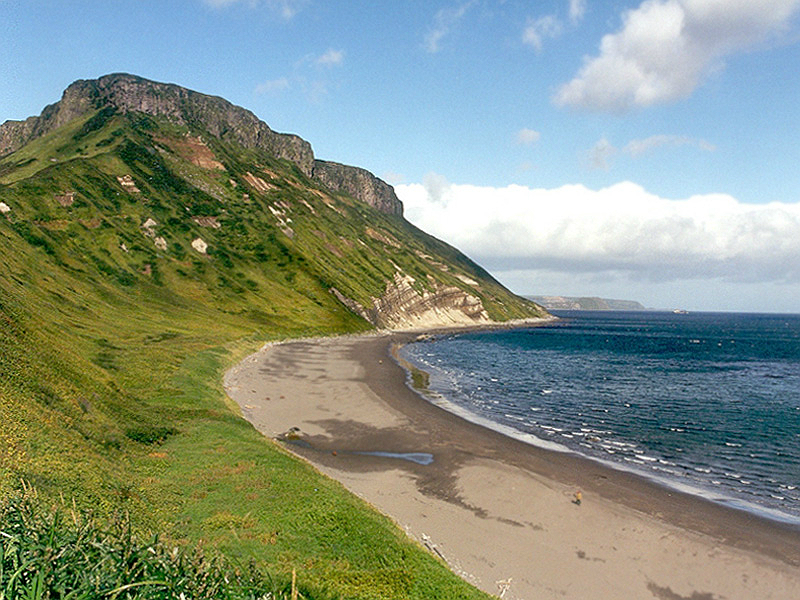
© PenzaNewsBuy the photo
However, a possible decision of the Russian President and Prime Minister of Japan to re-start the discussion on this issue does not determine the result and even does not mark the path that the leaders will follow in a settlement of the long-term dispute. This is the opinion expressed by Dmitri Trenin, Director of the Moscow Center of the Carnegie Endowment for International Peace, in an interview with news agency “PenzaNews.”
“At the same time the presence of frozen territorial problem is poisoning bilateral relations of Tokyo and Moscow, being a barrier to closer economic ties. None of the parties can obtain the desired result from the relationship,” the expert emphasized.
According to him, the idea that in a long term the current situation is not acceptable for the parties of the dispute is spreading in political circles in Japan and Russia.
“Japan has not got a lot of partners and is interested in strengthening relations with Russia, the Russian Federation needs an economic partner in the East, like the one it has in Europe,” Dmitri Trenin said.
According to the director of the Carnegie Moscow Center, the leaders of the two countries should work together to determine the formula for the solution of this issue, which should not be viewed as a separate territorial dispute settlement, but as part of the transformation of Russian-Japanese relations into the Asian equivalent of the Russian-German relations. Moreover, the leaders will have to convince the elite and the electorate that both parties benefit from the compromise solution.
The future course of the discussion, according to Dmitri Trenin, depends on which position the political leaders of the two countries will take up.
“If they choose not to risk, the situation will continue in the way we see it today – a sluggish dispute fraught with periodic aggravations,” he added.
However, the analyst believes that there is a possibility of solving the problem in the medium term.
“Putin’s presidency is the time interval within which a compromise solution can be achieved,” Dmitri Trenin stated.
In turn, Evgeniya Vojko, foreign policy expert of the Russian Center of Political Conjuncture, suggested that the territorial issue would not affect the dynamics and pace of relations development between Moscow and Tokyo.
“Outside the context of the Kuril Islands, Japan is not Russian key partner in Asia where most of trade and energy cooperation is developed with China,” she said.
In addition, the expert is sceptical about the successful settlement of the problem in the near future.
“The recent visits of Russian officials on the islands demonstrated the categorical position of Moscow on this issue: the authorities actively demonstrate that they will not positively respond to the demands of Japan,” Evgeniya Vojko noted.
According to her, Tokyo shows greater interest in the dispute settlement and periodically brings the issue to the agenda, but Moscow is quite satisfied with the current situation.
“The situation is not easy, and I do not see any concrete action that would solve the problem in the medium term,” she said.
The expert of the Center for Political Studies of Russia Elena Ponomareva shares this opinion. According to her, both parties do not have a clear motivation in the prompt resolution of the problem.
“Despite the fact that Russia has made some steps towards Japan (introduction of simplified visa regime, the permission to conduct economic activity on the islands, etc.), the more serious concessions are unlikely: there is a risk of “domino effect” with other countries that have territorial disputes with Russia. Moreover, the country’s leaders cannot just give away small but strategically important islands,” the analyst said.
“In many ways Japan’s position may be called non-constructive: numerous protests in connection with the “unacceptable” (in the view of Tokyo) visits of the Russian leadership on the disputed territory, the refusal to enter into a peaceful dialogue on existing problematic issues of bilateral relations, and confidence in “historical tradition” in circumvention of the established international agreements,” Elena Ponomareva added.
Furthermore, the expert stressed that the only Japanese concession was that the country renounced the term “illegal occupation” in talking about the situation and now refers to the islands as “occupied without any legislative mandate,” which in her opinion is again controversial.
“Despite the frozen issue and the lack of a peace treaty, the economic relations between the two states are developing dynamically. Russia is interested in Japan’s participation in the development of Far East, investments and construction. Japan, for its part, is interested in expanding energy cooperation with Russia,” Elena Ponomareva said.
Hironori Fushita, Research Fellow at Japan Institute of International Relations, also presented his vision over the situation in an interview with news agency “PenzaNews.”
“Many Japanese believe that Russia should return to them the Northern Territories (as the Japanese call the South Kurils) for in their opinion the Soviet Union illegally seized the islands after the end of the war. On 15 August 1945, Japan declared to accept the Potsdam Declaration and decided to stop all the fighting. Japan, therefore, officially sees August 15 as “the end of the hostilities in the Second World War.” But, on August 18, the Soviet army began to attack the Northern Territories and occupied them until September 5, 1945. Japan officially surrendered to the allied forces on September 2. However, the Soviet army stayed on the islands even after the unconditional surrender of Japan. These facts make the Japanese strongly demand the return of the Northern Territories occupied by the Soviet Union after the war,” he explained.
Analyzing possible ways of resolving the issue, the expert, first of all, noted the need to maintain a constructive dialogue.
“Japan must tell the Russian people the true history of the problems of the Northern Territories and its flexible approach to the issues. And, as Japan and Russia agreed on various occasions, the two countries should engage in serious negotiations to resolve the issue expeditiously. At the same time, it is useful for Japan and Russia on mutually beneficial issues. Moreover, the upcoming APEC summit provides opportunities to build mutual trust between the heads of the two countries and will have a positive impact on the relationship. I think that the intensification of diplomatic contacts and mutual trust will be the key to resolving the issues,” Hironori Fushita stated.
Meanwhile, another Japanese researcher in a government organization on condition of anonymity suggested that both countries have no reasons to make concessions at the moment.
“Today’s dispute is very different from a potentially dangerous situation in 2004 when Russia and China managed to find a solution to the territorial issue. Japan has no intentions or military posture to occupy the disputed islands by military means, which Russia understands well. And in terms of domestic politics, both leaderships have difficulties in making concessions to foreign states. Prime Minister Naoto Kan was in a weak position in November 2010 and tried to look strong when he used provocative language against Medvedev’s visit to the island. Now Prime Minister Yoshihiko Noda has a more moderate stance but cannot make concessions either, with the other two issues with China and South Korea being hot currently,” the expert stated.
However, according to him, the residents of the “four islands,” who have been patiently enduring the difficulties caused by undetermined border for 60 years, are in need of resolving this dispute.
“Japanese fisher boats are detained by the Russian border service in the waters rich in fishes but unclear in legal terms. But with an agreed border, they could legally go to the area, and engage in fishery according to the border. Japanese companies could invest and develop the islands. Patrol services could operate with a clear border and illegal activities could be effectively suppressed. And Japanese government would no longer refrain from a larger economy cooperation project with Russian Far East,” the anonymous source explained.
At the same time, now Japan, according to him, tends to think Russia is increasingly weary of the growing power of China and some strategic cooperation is possible.
“A containing alliance is not an option, because Russia wants to keep China a friendly neighbor. But if both can agree on some strategic measures (perhaps it can be even multilateral talks) to stabilize security among Russia, China and Japan, that would be a clue for other issues, including the territorial one,” the analyst emphasized.
Meanwhile, the deputy director of the Institute of World Economy and International Relations of the Russian Academy of Science Vladimir Baranovsky noted that talks on a peace treaty – as a special diplomatic process which is focused on achieving this result – are not conducted. While the APEC summit, which is aimed at promoting cooperative approaches to international political development in the region, in his opinion, will have a positive impact on relations between Japan and Russia.
“The positions of Moscow and Tokyo on the above subject are diametrically opposed, and I do not see any sign of a possible willingness to compromise. But from the point of view of international stability, the parties should avoid increasing political tension around the issue and excessive focus on it. Unfortunately, sometimes not international security but other motives turn out to be prevailing,” Vladimir Baranovsky said.
“The dominant vector should be the development of joint efforts on the organization of cooperation around the South Kuril Islands. Russia views it possible and desirable without any preconditions, Japan — just in case of recognition of its sovereignty (even “postponed”) over the disputed territories,” he added.
Moreover, the key to the settlement of the dispute, according to the expert, is the Russian-Japanese rapprochement.
“If cooperation will be widespread, in course of time the problem may simply become irrelevant and incommensurable with other themes of Russian-Japanese relations,” the academician concluded.
The Kuril Islands (also known as the Northern Territories) are volcanic islands that stretch about 1,200 km northeast from Hokkaido, Japan, to Kamchatka, Russia, separating the Sea of Okhotsk from the North Pacific Ocean. The total land area is about 15,600 sq km.
In 1745, a large part of the Kuril Islands was mapped to the General Map of the Russian Empire in the Academic atlas.
In the second half of the XVIII century permanent Russian settlement existed in the Kurils.
The Japanese moved to the Northern Kurils in parallel with the development of the Kurils by Russia. In 1795, Russia built a defensive fortified military camp on the island of Urup.
By 1804 the islands had the dual power: Russia’s influence was felt more strongly in the Northern Kurils, Japan’s — in the South. Formally, the Kuril Islands still belonged to Russia. In accordance with the map of 1809, the Kurils and Kamchatka were attributed to the Irkutsk region.
On 7 February 1855, the countries signed the first Russian-Japanese treaty, under which all the Kuril Islands to the north of the Iturup island were declared Russian.
In accordance with the Russian-Japanese Treaty of 1875, Russia ceded to Japan 18 Kuril Islands. Japan, in turn, recognized the island of Sakhalin wholly owned by Russia.
In the period from 1875 to 1945, the Kuril Islands were under the Japanese rule.
Under the decision of the Yalta Conference of heads of the USSR, the USA and the UK held in 1945, the Kuril Islands were to be transferred to the Soviet Union after the war against Japan.
As a result of the Kuril landing operation August 18 – September 1, 1945, the Kuril Islands were liberated from Japanese troops by the Soviet Army.
On 2 September 1945, Japan signed the unconditional surrender, accepting the Potsdam Declaration of 1945, according to which its sovereignty was limited to the islands of Honshu, Kyushu, Shikoku and Hokkaido and the smaller islands of Japanese archipelago. Iturup, Kunashir, Shikotan and Habomai passed to the Soviet Union.
On 2 February 1946, Iturup, Kunashir, Shikotan and Habomai were incorporated into the Soviet Union by the Presidium of the Supreme Soviet of the USSR.
According to the San Francisco Peace Treaty of 1951, Japan renounced all rights to the Kuril Islands. Soviet delegation did not sign the treaty, saying that it considered it as a separate agreement between the governments of the United States and Japan.
Joint Declaration of the Soviet Union and Japan of 1956 officially put an end to hostilities between the two countries. Moscow agreed to transfer Shikotan and Habomai to Japan after the peace treaty, however, the Japanese government insisted on the transfer of all four islands – so a peace treaty was not signed.
After the conclusion of the Japan-US Security Treaty in 1960, the Soviet Union withdrew commitments made by the Declaration of 1956.
In 1993, the Russian President and Prime Minister of Japan signed the Tokyo Declaration on Japan-Russia relations, according to which the parties agree to continue negotiations for an early conclusion of a peace treaty.